How to Write an Authentic Bio for Your Therapist Website
SHARE THIS:
For many therapists, writing about themselves feels like walking into a room full of strangers and announcing their life story. It’s uncomfortable, vulnerable, and just plain awkward. Maybe you’re worried about sounding too clinical, or perhaps you’re concerned about sharing too much personal information. The struggle is real, and you’re definitely not alone.
However, the bio on your “About Me” page is one of the first stops for potential clients who are trying to decide whether you’re the right therapist for them. They’re not just looking at your credentials (though those matter too). They want to know if you’re someone who gets it, someone they’d feel comfortable opening up to during their most vulnerable moments.
With the right approach, you can write a bio that feels authentic and professional without making you cringe every time you read it. Let’s dive into how to make this happen.
Why Your Therapist Bio Matters More Than You Think
Think about the last time you chose a new doctor, dentist, or even a hair stylist. You probably looked them up online first, right? Your potential therapy clients are doing the exact same thing. They’re dealing with anxiety, depression, relationship issues, or trauma, and they need to feel safe before they ever step foot in your office.
Your “About Me” page builds that crucial connection before you even meet. It’s your chance to show that you’re not just a therapist with impressive credentials, but a real human being who understands what they’re going through. This page helps humanize your practice in a way that a simple bio listing your degrees and certifications can’t.
Plus, your “About Me” page helps differentiate you from other therapists in your area. When someone is scrolling through Psychology Today or your local directory, your unique voice and approach can be the deciding factor that makes them pick up the phone and call you instead of the therapist listed right below you.
Balance Professionalism with Personality
Here’s where many therapists get stuck. You want to sound professional and credible, but you also want to come across as warm and approachable. The good news is you don’t have to choose one or the other.
Start with your qualifications, training, and specialties. These are important, and clients want to know you’re qualified to help them. The key is to write about them in plain, relatable language instead of clinical jargon. Your clients want to feel understood, not analyzed before they’ve even met you.
For example, instead of writing “I utilize evidence-based interventions including Cognitive Behavioral Therapy and Dialectical Behavior Therapy to treat mood disorders,” try something like “I use proven techniques like CBT and DBT to help clients understand their thoughts and emotions, and develop practical tools for feeling better.”
Then, sprinkle in those approachable details that make you human. Share your philosophy about therapy, your values, or what inspired you to become a therapist. Maybe you believe that humor has a place in healing, or perhaps you’re passionate about helping people rebuild their relationships with themselves. These details help potential clients connect with your approach.
Write Your Bio for Your Ideal Client (Not Your Colleagues)
This might be the most important shift you can make. Stop writing for other therapists or trying to impress your former professors. Write for the person who’s sitting in their car in your parking lot, working up the courage to come inside.
Think about what your clients are really looking for when they read your page. They want reassurance that you won’t judge them. They want to see that you have empathy for their situation. They want evidence that you actually know how to help people with their specific struggles.
Frame your bio around their needs, not just your résumé. Instead of simply stating “I’m trained in CBT,” try “I help clients identify and shift unhelpful thought patterns that keep them stuck, using evidence-based tools like CBT.” See the difference? The second version focuses on the benefit to them, not just your training.
If you specialize in anxiety, don’t just list it. Paint a picture for your potential client. “I work with people who are tired of anxiety running their lives. I’m here to help you stop second-guessing every decision and start feeling confident in your choices again.”
Show Personality Without Oversharing
Adding personal touches to your “About Me” page makes you relatable and memorable, but there’s definitely a balance to strike. You want to share enough to seem human and approachable, but not so much that you’re crossing professional boundaries.
Think about adding small touches that support your professional image. Maybe you love hiking because it reminds you of the importance of taking things one step at a time, a philosophy you bring to therapy. Perhaps you’re a dog lover, which speaks to your compassionate nature. Or maybe you chose to practice in your community because you believe in the power of local connections.
Keep your boundaries in mind as you write. Personal details should enhance your professional credibility, not distract from it. Ask yourself: “Does this help potential clients understand my approach to therapy, or is this just about me?” If it’s the latter, save it for conversations with friends.
Remember, you’re aiming for warmth and approachability, not a personal diary entry. Your clients need to feel like they’re learning about their potential therapist, not reading about your weekend plans.
Use a Friendly, Conversational Tone in Your Bio
Academic writing and therapy websites don’t mix well. Your bio should feel like you’re having a conversation with a potential client, not defending your dissertation.
Write in first person using “I” statements. This makes the page feel personal and genuine. Use shorter sentences and everyday language. Instead of “I facilitate therapeutic interventions designed to ameliorate symptomatology,” try “I help people feel better using techniques that are proven to work.”
Skip the therapy clichés while you’re at it. Phrases like “I’ve always wanted to help people” or “I provide a safe space” are overused and don’t tell potential clients anything unique about you. Instead, share a real story or perspective that sets you apart. Maybe you became a therapist after your own experience with therapy changed your life, or perhaps you’re passionate about helping people because you believe everyone deserves to feel genuinely happy, not just “fine.”
Design and Formatting Tips That Make a Difference
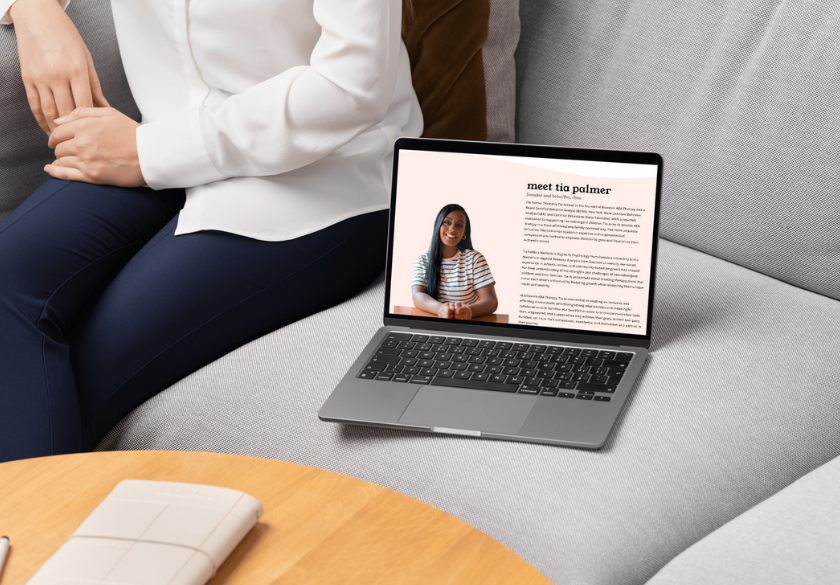
Your words matter, but so does how they’re presented. Include a professional photo that’s also approachable (business casual rather than suit and tie). You want to look competent but not intimidating.
Break up your text with subheadings or bullet points to make it easier to read. People often skim websites first, so make sure they can quickly find the information they’re looking for. Consider using subheadings like “My Approach,” “Who I Work With,” or “What You Can Expect.”
End your bio with a clear next step. Don’t leave potential clients hanging—tell them exactly how they can reach out or schedule a session. Make it as easy as possible for them to take that next step, whether it’s filling out a contact form, calling your office, or booking online.
Making Your Therapist Website Bio Work for You
Your bio or “About Me” page doesn’t have to feel awkward. It’s an incredible opportunity to build connections and give potential clients confidence in your services. When you write with your ideal client in mind, balance professionalism with personality, and use a conversational tone, you create a page that feels authentic.
Take some time to revisit your current bio. Does it sound like the therapist you actually are in session? Does it speak directly to the people you most want to help? If not, it might be time for a refresh.
Creating a therapist website that reflects your unique voice and approach doesn’t have to be overwhelming. If you’re ready for a website that makes it easy for people to take the next step toward working with you, consider reaching out to professionals who specialize in therapist websites.
Social media is the most effective and affordable marketing tool available to small businesses today. Creating a compelling business blog is crucial for establishing…